
Is your home office/workspace bursting at the seams with clutter and paperwork?
If so,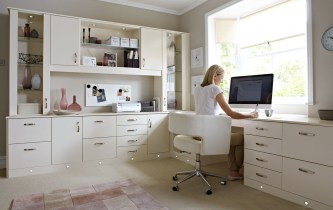 that clutter may be keeping you from effectively managing your business. Surrounding yourself in paperwork and clutter only adds stress to the already overwhelming job of record-keeping and paperwork. Here are a few tips that may help you get organized and reduce that awful stress:
- TRASH all papers you will not need anymore. As your business expands, so does the volume of mail you receive. Get in the habit of opening your mail everyday and sorting through it. Keep all the important paper and trash the rest. Get rid of flyers, empty envelopes, boxes, plastic wrapping etc immediately so they don’t collect and clutter your space. Of course, we encourage you to recycle what you can into a recycle bin and trash the rest! You will need to make space for all of the new files you are about to create.
- ORGANIZE your papers and other items in your workspace. This may mean a trip to the office supply store. You may want to use ring binders, file folders and file boxes to keep documents together. Small desktop organizers will keep your pens, paper clips, note pads and other small items together in an easy to find place – there is nothing worse than constantly searching for that pen you know you just had!! A small cork or magnetic board will be helpful for posting important reminders, calendars or other items you don’t want to get lost in the paper shuffle on your desk.
- FILE your documents on a weekly basis. Make it a point to spend some time every week dealing with the documents on your desk. If it works for you, pick one day a week that is dedicated to office/paperwork – I like Fridays! Once you have dealt with a document, file it away. Searching for documents can eat up so much time that could have otherwise been more productive. Create yourself a filing system that you understand and works well for your business. Add labels to file folders, file boxes or even drawers. That way you will know exactly where to put your documents when filing and where to look when you need something at a later time. If you can stick to a weekly routine, the paper clutter will stay at a minimum and make the task less overwhelming.
- FREE your space of useless dust collectors. Even more expensive items can be considered clutter if they do not serve any functional or aesthetic purpose. They may include old office furniture or outdated electronic gadgets no longer in use. Gather cables and cords under your desk or workspace. Tie them together with twist ties, zip ties or anything to keep them from getting underfoot and creating hazards.
- CREATE more storage space by building multiple shelves against a wall. Higher shelves can hold files and papers that you are not currently working on while the lower ones can be used for those you need on a daily basis; perhaps lighter items on the top shelves with heavier boxes on the bottom. Shelves are generally inexpensive, but if that is not an option, then perhaps try stacking file boxes or filing cabinets. Remember to label them!
- BRIGHTEN your office with desk lamps, brighter lighting or windows. A dark working environment is not conducive to productivity and good business. Dim lights tend to make the work area gloomy and you to feel lethargic. You will most likely avoid your paperwork if your workspace is dark and dingy.
 o thinking that most people do not truly understand the importance of filing those tax returns by the deadlines set out by CRA.
 It is important to understand a few terms before we go into an example of what it can cost to be a late filer. First, the term
 Instead of owing $35,000, Susie now owes:


 re was a four-digit access code on the front page. Each form had a different code and if you misplaced it, you had to contact CRA to get a new one so you could file your GST online for that specific period. Starting Oct. 19, 2015 the CRA will be sending all GST registrants a “new and unique” access code. This code will be used for all future returns and you will not be receiving a new one each time. You will also have the ability to change that access code to one of your own choice by going to the
  f your reporting periods with the due dates and all of the remittance vouchers for the entire fiscal year. Please don’t misplace these. If you do not pay your GST online, but rather pay it at the bank, you will need those remittance vouchers. If you bring them in to us, we will be happy to hold them for you for safekeeping!


 There are many other rules regarding qualification, holidays worked, holidays not worked, calculating average daily wage for the holiday etc. Please refer to


 Especially in the start up stages of a new business, there can be huge expenses when getting a business off the ground – even before the revenue starts coming in. You may find yourself making large purchases for equipment, inventory, office supplies & furniture, rent, etc. If you have voluntarily registered for a GST number, you are eligible to claim the GST you spent on those items (that GST is referred to by CRA as Input Tax Credits or ITCs) and receive a refund or credit. At that stage, getting that GST back can mean a lot to the balance of your bank account. If you can get back some of what you spent, then why wouldn’t you? If you choose to apply later, you will not be allowed to go back in time to claim that GST paid. It will be money lost. You can only begin claiming those ITCs from the date your GST number takes affect.


